Internal Medicine
Melbourne Veterinary Medicine Specialists
The Internal Medicine team at the Melbourne Veterinary Specialist Centre is skilled in the investigation, diagnosis and medical (non-surgical) management of most diseases affecting the internal function of your pet’s body. Both dogs and cats are fully catered by this team of caring Specialist Veterinarians and experienced veterinary Nurses.
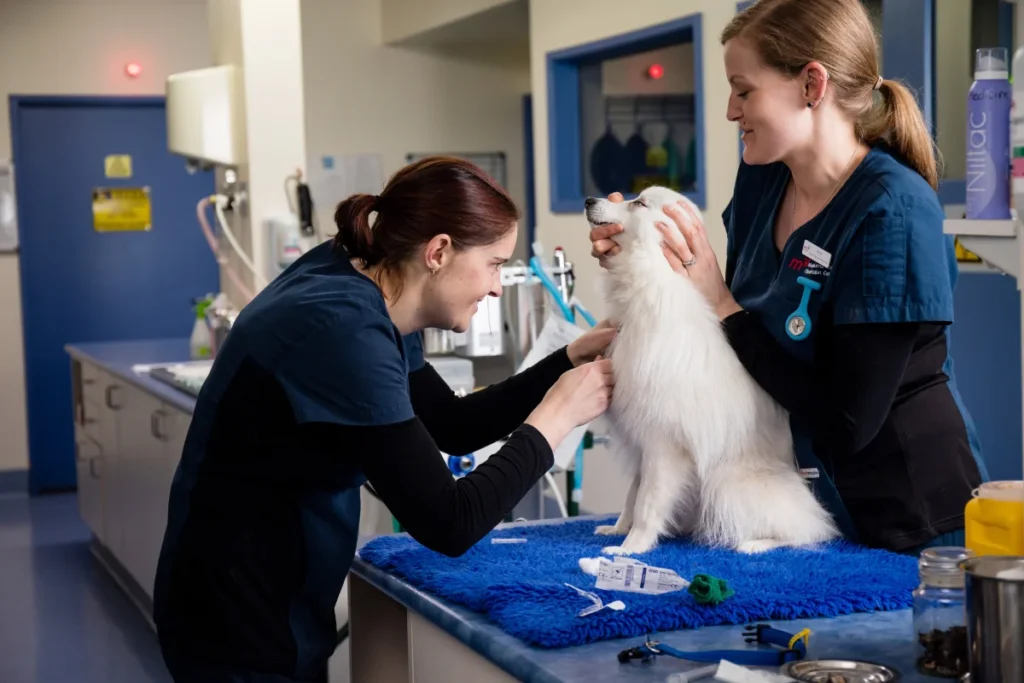
Our Specialists have spent many years developing knowledge and practical techniques in this extensive field. The areas of investigation vary from hormonal to gastrointestinal and from cardiac to neurological.
The extensive range of diagnostic equipment at the Centre enables us to review, diagnose and treat the most complex and challenging of medical cases. Diagnostic procedures commonly performed include radiography, ultrasonography, Magnetic Resonance Imaging (MRI), computed tomography (CT scan), video endoscopy, and electrocardiography. Due to our extensive range of equipment, all these procedures can be performed within our clinic or at a local offsite facility (CT scan), usually on the same day if required. All manner of problems can be tackled and solved by using:
The Internal Medicine team can see Patients from Monday to Friday at Glen Waverley. Cases can typically be seen within a few days; or, often more quickly based on urgency. We have Nurses onsite, including overnight, to provide Patients with the professional care and treatment required.
Timely communication with your referring veterinary clinic will ensure all ongoing care is co-ordinated and tailored to your pet’s needs. In addition, many Vets frequently seek advice from our Specialists regarding their cases. This means your local vet practitioner can discuss clinical problems with MVSC Specialists, which may provide further avenues for your Vet to pursue OR determine whether a referral to our Specialists would be beneficial.
Key Procedures & Services
The Veterinary Medicine Department is fully equipped to investigate a full range of referral case problems using:
The cases that are investigated include the full gamut of medical problems, such as: acquired and congenital cardiovascular disease; alimentary problems; urinary tract disease; respiratory disease; comprehensive cancer care; neuromuscular disorders; endocrine diseases; and haematologic disorders.
Equipment & Technology
MRI (Magnetic Resonance Imaging)
MVSC has the only Veterinary MRI in private practice in Victoria. The specifically designed VetMRI machine is housed within our Specialist Centre in Glen Waverley. It is readily available to same-day procedures, and is an important veterinary diagnostic tool.
Some of the benefits of having an on-site MRI machine include:
Digital Radiography & Fluoroscopy
Digital radiography is a form of X-ray imaging, where digital X-ray sensors are used instead of traditional photographic film. Advantages include:
Fluoroscopy is an imaging technique commonly used by physicians to obtain real-time moving images of the internal structures of a patient through the use of a fluoroscope. In its simplest form, a fluoroscope consists of an X-ray source and fluorescent screen between which a patient is placed—most commonly used for imaging oesophageal and trachea movement.
Endoscopy (Gastroscopy, Colonoscopy, Bronchscopy)
Endoscopy is a medical procedure which allows a veterinarian to observe the inside of the body without performing major surgery. An endoscope (fibrescope) is a long, usually flexible tube with a camera at one end and a control device at the other. The end with the camera is inserted into the patient. Light passes down the tube (via bundles of optical fibres) to illuminate the relevant area and the images are sent to the television screen via the camera. Usually, an endoscope is inserted through one of the body’s natural openings, such as the mouth, nostrils or anus. Endoscopy allows us to take biopsies from internal structures to aid in the diagnostic process. It is also useful in the removal of foreign bodies.
This is a diagnostic process that uses the reflection of high-frequency sound waves to make an image of structures deep within the body. It is used to visualise subcutaneous body structures vessels and internal organs for possible pathology or lesions. It is possible to perform both diagnosis and therapeutic procedures using ultrasound to guide interventional procedures (for instance biopsies or drainage of fluid accumulation). A water-based gel is used to couple the ultrasound between the transducer and Patient. This is a non-invasive procedure which can be performed on a sedated or non-sedated patient.
Electrocardiography (ECG) is the recording of the electrical activity of the heart over time via skin electrodes. It is a non-invasive recording produced by an electrocardiograph. Electrodes on different sides of the heart measure the activity of different parts of the heart muscle. An ECG displays the voltage between pairs of these electrodes, and the muscle activity that they measure, from different directions. This display indicates the overall rhythm of the heart and weaknesses in different parts of the heart muscle. It is the best way to measure and diagnose abnormal rhythms of the heart.
Preparing For Your Visit
The Medicine team is available to see patients on Monday through Saturday at Glen Waverley and Monday to Friday in Essendon Fields.
Cases can typically be seen within a few days or more quickly for urgent cases. Bookings are necessary and are made in priority of urgency.
At the time of your initial consultation, one of our nurses will greet you and take your pet and you to a consultation room, check relevant details and perform a brief initial evaluation. This information will be passed onto the clinician who will have reviewed the referral information. Our specialist will join you as quickly as possible, but there may be a short delay in cases where the clinical material is extensive.
An initial consultation lasts for up to an hour. This allows time for your pet’s problem to be carefully explored and a thorough clinical examination to be performed.
A range of options then will be discussed, which might include further tests and/or treatment options. Expected outcomes, problems that might arise and differences between the alternatives will be discussed. If needed, time is given for the options and information to be discussed with other family members.
One of our Nurses will present estimates of costs for the various procedures and/or treatments anticipated. If there are procedures to be performed, in most cases these are on the same day as the consultation. If this is not possible, or it does not fit with your plans, they can be organised for another day. As many procedures might require sedation or anaesthesia, we request that pets are not fed on the morning of the consultation or procedures, unless the medical problem requires a meal to be given.